






Executive summary:
- 65% of surveyed U.S. minors said an online-only contact had invited them to move from public chat to a private conversation on another platform, according to Thorn. Online grooming is deliberate relationship-building or manipulation intended to enable sexual abuse or exploitation.
- Why it matters: Grooming may move from ordinary gameplay to private messages, secrecy, sexual requests or coercion. This guide explains the stages, what makes a pattern concerning and how to respond without blaming your child.
- How FlexiSPY can help: When conversations and safety settings are not enough, FlexiSPY can provide deeper visibility into supported activity on a minor child’s Android phone or a computer you have authority to monitor
What Online Grooming Is—and What It Is Not
Online grooming is a deliberate process in which someone builds access, trust or control over a child for sexual abuse or exploitation. The person may use attention, friendship, romance, gifts, threats or a mixture of these tactics.
It is not simply any awkward conversation, unknown friend request or interaction with an older player. Those events deserve sensible boundaries, but grooming involves manipulative intent and usually a developing pattern of privacy, dependency, sexualization or coercion. If you are still establishing who a new contact is and what they want, use this context-first guide to talking to strangers online.
The person may be an anonymous stranger, but not always. They could be an adult the child already knows or another young person. The NSPCC also notes that a child may feel loyalty, admiration, love or affection toward the person, even while feeling frightened or confused. To your child, this may seem like a valued friendship or relationship—not an obvious threat.
The 5 Stages of Online Grooming—and Why They Are Not Always Linear
The GOV.UK framework on online child sexual exploitation and abuse emphasizes that stages can happen quickly, repeat or occur out of sequence. Someone may introduce sexual content immediately, or return to praise and reassurance after making a threat.
1. Initial contact and information gathering
Contact may begin in a public game lobby, team or guild chat, voice channel, livestream comments, community server, friend request or social app. The opening can seem completely ordinary: help with a level, praise for the child’s skills, a joke or an invitation to join another match.
At the same time, the person may begin assessing risk. Questions such as “How old are you?”, “Where do you live?”, “Are your parents strict?”, “Do they read your messages?” or “When do you usually play alone?” reveal how closely the child is supervised. They may also ask whether chats disappear or screenshots are retained.
Voice chat deserves particular attention because it may leave little visible history. Headphones make the conversation harder for a parent to overhear, and a confident voice or claimed age is not proof of who someone really is.
2. Repeated contact and a move into private chat
The person starts appearing regularly, repeatedly teams up with the child or sends direct friend invitations. They may offer virtual items, in-game currency, help, status within a group or access to an exclusive server.
Next may come an invitation to leave the public space: “This chat is laggy,” “Message me somewhere easier” or “Let’s talk where the others can’t interrupt.” In Thorn’s survey of 1,200 U.S. minors ages 9–17, 65% said an online-only contact had invited them to move from public chat to a private conversation on another platform.

That move is a checkpoint, not proof of grooming. Friends change apps for innocent reasons. Concern rises when the move is combined with secrecy, questions about parental oversight, disappearing messages or pressure to keep the relationship exclusive.
3. Trust, emotional dependency and secrecy
The person tries to become unusually important to the child. They may provide constant attention, sympathize with problems at home, act as a mentor or frame the connection as romantic. Phrases such as “You’re more mature than everyone else,” “I’m the only person who understands you” or “You can tell me anything” can make the relationship feel special.
Isolation may be subtle. The person might criticize parents and friends, become jealous when the child plays with someone else or create a sense that gifts must be repaid. Requests for secrecy can initially sound harmless: “People wouldn’t understand our friendship” or “Don’t tell your parents—they’ll make you block me.”
4. Boundary testing and sexualization
Sexualization can begin with personal questions, sexual jokes, comments about the child’s appearance or supposedly educational conversations. The person may share explicit material, suggest escalating dares, request private photos or ask the child to turn on a camera.
Often the first boundary crossing is presented as a joke, accident or test of trust. If the child objects, the person may apologize and return to friendly conversation before trying again. That retreat does not necessarily mean the risk has passed.
5. Coercion, blackmail or an offline plan
Once the person has private information or an image, the tone may change. They may use guilt, shame, threats, persistent demands or threats to share material with family and friends. Parents can use these sextortion warning signs to recognize when image-based pressure has become an active threat. Gifts can be reframed as debts. A romantic bond can be used to demand proof of love.
Requests for a home address, school details, live location, travel arrangements or an in-person meeting are urgent escalation signals. Not every grooming situation reaches this point, but a proposed meeting should never be treated as something the child can manage alone.
Is It an Online Friendship or a Grooming Pattern? Four Questions to Ask
No isolated sign proves grooming. Instead of focusing only on whether the person is a stranger or whether your child changed apps, look for movement across four dimensions: visibility, secrecy, boundaries and control.
| Question | What may have an innocent explanation | What raises concern | Calm question to ask | Proportionate response |
|---|---|---|---|---|
| Is the relationship becoming less visible? | Teammates add each other as friends or use another app for easier group chat. | The person insists on private or disappearing messages, asks the child to delete chats or repeatedly avoids moderated spaces. | “How did you decide to move the conversation there?” | Review contacts and privacy settings together. Watch for secrecy or further escalation. |
| Are they testing what the child will hide? | A friend asks when the child is available to play. | Questions focus on parental checks, when the child is alone, whether messages are saved or how to communicate without adults noticing. | “Have they ever asked you to keep the friendship or a message secret from us?” | Explain that safe friends do not require secrecy from trusted adults. Preserve relevant account details if the pattern continues. |
| Are personal or sexual boundaries escalating? | Peers may joke awkwardly or discuss relationships. | Repeated sexual questions, explicit material, requests for images, camera demands or escalating dares continue after discomfort or refusal. | “Has anyone asked you for something that felt strange, embarrassing or too personal?” | Reassure the child, stop further contact safely, retain relevant information and report the account. |
| Is emotion, money or fear being used as control? | Friends exchange gifts or feel disappointed when plans change. | Gifts create a debt, affection depends on compliance, or the person uses jealousy, guilt, threats, blackmail or fear of exposure. | “Do you feel you can say no to this person without them getting angry or threatening you?” | Treat threats, blackmail, location sharing and meeting plans as urgent safeguarding issues. |
The strongest warning is not one app switch or gift. It is a pattern in which the child has progressively less privacy from the other person, less freedom to say no and more pressure to hide what is happening from safe adults.
Warning Signs You May Notice at Home
Changes in behavior can have many causes, particularly during adolescence. Look for clusters, sudden changes and signs that appear after specific notifications or gaming sessions:
- New accounts, unknown contacts or unfamiliar chat apps.
- Repeatedly switching screens when an adult enters the room.
- A sharp increase in late-night gaming or private messaging.
- Unexplained virtual currency, game items, devices or other gifts.
- Distress, panic or anger immediately after receiving messages.
- Unusual secrecy about one particular friend or teammate.
- Withdrawal from offline friends or activities as an online relationship becomes central.
- Sexual language or knowledge that seems developmentally unexpected.
- Fear that an image, secret or conversation will be exposed.
- Talk of meeting an online contact or sharing a school, address or live location.
These signs tell you to ask questions; they do not prove abuse. Sudden punishment or confiscation can make a frightened child less willing to explain what is happening, especially if they believe they are in love, have broken a rule or will lose their main social group.
How to Start the Conversation Without Blaming Your Child
Choose a calm moment rather than confronting your child while you are angry or alarmed. Start with what you noticed, not an accusation:
“I noticed you seemed really upset after that message. You’re not in trouble, and I’m not going to blame you. I want to understand what happened and help you feel safe.”
Ask open questions: Who is the person to them? Where did they first meet? Did the conversation move elsewhere? Has the person requested secrecy, images, location information or a meeting? Does your child feel able to stop replying?
Say explicitly that the person who used manipulative or sexual behavior is responsible for it. Even if your child broke a family rule, shared something private or initially welcomed the attention, that does not make exploitation their fault.
What to Do Next, Based on the Level of Risk
Concerning contact, but no sexual content or threats
- Listen before changing every setting or removing the device.
- Review the account, contact and privacy settings together.
- Restrict unsolicited friend requests, direct messages and location sharing where appropriate.
- Discuss why moving to a private app can reduce visibility and moderation.
- Agree on what your child should do if the person requests secrecy or personal material.
Sexual requests, explicit material or pressure for images
- Tell your child clearly that they are not in trouble.
- Retain relevant usernames, profile links, timestamps and available messages without forwarding sexual material.
- Check the platform’s reporting process before deleting the account or conversation.
- Block and report the account when doing so will not interfere with immediate safety steps.
- In the United States, report suspected online sexual enticement to the NCMEC CyberTipline.
NCMEC received 1.4 million reports concerning online enticement in 2025, including more than 80,000 reports concerning sextortion. These are reports—not necessarily unique children, confirmed crimes or a measure of an individual child’s risk. NCMEC also says expanded reporting requirements affected the increase from 2024.
Threats, blackmail, location sharing or a planned meeting
- Treat the situation as urgent and keep your child with a safe adult.
- Do not negotiate with or pay the person making threats.
- Preserve available account and conversation information.
- Contact law enforcement. If a meeting is imminent, the child is missing or anyone is in immediate danger, contact emergency services.
- Continue reassuring your child. Fear of punishment or exposure is exactly what coercive people exploit.
Reducing Risk Without Cutting Your Child Off From Their Friends
Start with the controls already available in the game, console, computer and messaging accounts. Depending on the service, you may be able to limit who sends friend requests, starts private chats, joins voice channels or sees location and activity information.
Settings help reduce unsolicited access, but they cannot determine someone’s intent or prevent a trusted contact from becoming manipulative. Keep checking in about who your child plays with, where conversations continue after the game and whether they feel free to block someone without social consequences.
Make voice chat part of the family safety conversation. Agree on when headphones are appropriate, which channels may be used and what your child should do if someone asks personal or sexual questions. The goal is not to overhear every conversation; it is to ensure your child knows that secrecy, pressure and threats should be brought to you.
When Deeper Device Visibility May Help
For many families, a conversation and stronger account settings will be enough. Deeper monitoring may be proportionate when there is an active safety concern, repeated hidden accounts or contact moving across several services.
On a minor child’s Android phone, FlexiSPY Lite includes application activity, installed applications, browsing activity, location tracking and dashboard alerts. Premium adds supported messaging and social services including Discord, Instagram Direct Messages, Snapchat Messages, Telegram Messages, TikTok and WhatsApp Messages, as well as application screenshots. The Computer product includes application activity, app screenshots, browsing activity, key logs and several supported messaging services.
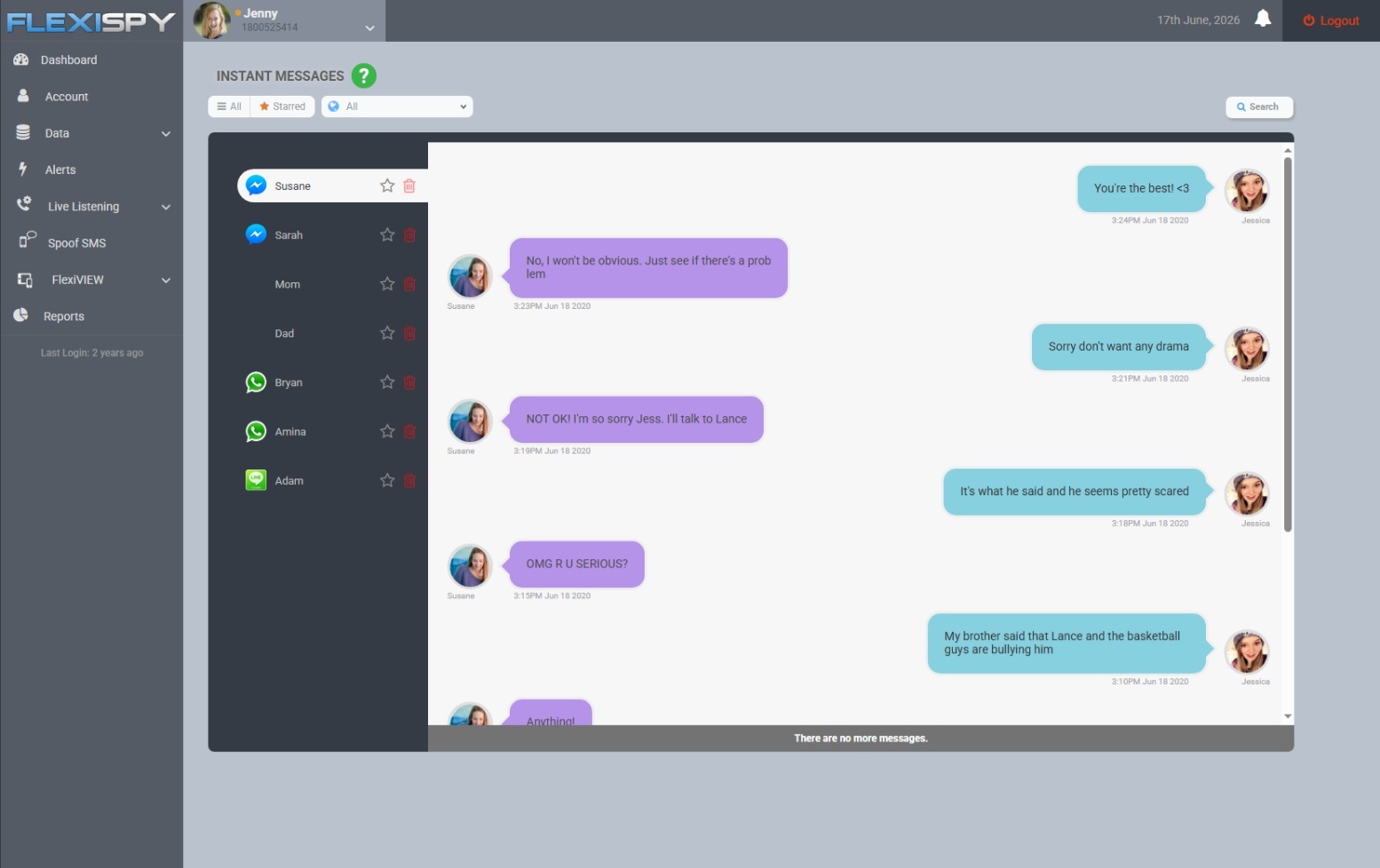
FlexiSPY is designed for Android phones and computers, so it does not replace the separate safety settings on a gaming console or within each account. Use monitoring as part of a clear family safety plan—not as a substitute for listening to your child.
Only monitor a device you own or have legal authority or consent to monitor, such as your minor child’s device. Laws concerning message capture, call recording and similar features vary by country and state. Check local requirements before using them; this is not legal advice.
The Most Important Pattern to Remember
Online grooming is not defined by a particular game, app or age difference. It is the developing use of access, trust, secrecy, sexualization or coercion to exploit a child.
If you have found something worrying, lead with calm reassurance: “You are not in trouble. I believe you. We will handle this together.” Protecting that line of communication may be the most important step you take.