






Executive summary:
- Nearly three in four teens — 72% — have already used an AI companion app like Character.AI or Replika, according to a 2025 Common Sense Media survey reported by CNN, and most parents have no idea it’s happening on their kid’s phone.
- An AI companion is different from a homework-helper chatbot: it’s designed to feel like a relationship, not a tool.
- Most kids using these apps aren’t in crisis, but a small, real number are forming attachments that replace real friendships or reinforce harmful thinking.
- FlexiSPY can show you which apps are actually installed and what’s happening inside the ones that matter most — a useful backstop when a conversation alone isn’t giving you the full picture.
If you just found Character.AI, Replika, or a suspiciously chatty „friend“ on your kid’s phone and you’re not sure whether to panic, you’re not alone, and panicking isn’t the move.
This is a genuinely new category of technology, less than three years old for most families, and it doesn’t map onto anything you dealt with as a teenager.
So let’s start with what these things actually are.
What is an AI companion, exactly?
An AI companion is a chatbot built specifically to simulate an ongoing relationship — a friend, a romantic partner, a mentor, sometimes a fictional character — rather than to answer questions and move on.
Character.AI and Replika are the two names that come up most, but Snapchat’s My AI and Meta AI function the same way for a lot of teens, and plenty of kids treat general-purpose tools like ChatGPT as a companion too, even though that’s not what it was built for.
The distinguishing feature isn’t the technology underneath — it’s the design intent.
A homework chatbot wants to give you a correct answer and end the session.
A companion app wants you to come back, remembers your last conversation, asks how your day was, and is engineered around one metric: how long you stay talking to it.
Why do these apps hook kids so fast?
It’s not mysterious once you see the mechanics.
A companion bot is available at 2 a.m. when a friend is asleep.
It never gets bored, never judges, never brings up its own problems, and it’s tuned to be agreeable — what researchers call sycophancy.
Say something sad, insecure, or even alarming, and the model’s default behavior is to validate you, because validation keeps the conversation going.
For a teenager who’s anxious, lonely, or just going through a normal rough patch of adolescence, that combination — infinite patience plus constant agreement — is genuinely more emotionally comfortable than a real friend who might disagree, get distracted, or have a bad day of their own.

That’s also exactly why it can go sideways.
A friend who always agrees with you isn’t practicing friendship — they’re practicing something closer to a mirror.
Researchers at Stanford have flagged this as a specific concern for young people: because these systems are optimized to keep users engaged rather than to challenge unhealthy thinking, they can end up reinforcing exactly the ideas a struggling teen most needs someone to push back on — Stanford’s research on AI companions and young people found this pattern showing up repeatedly in how the apps respond to distress.
How many teens are actually doing this?
More than most parents assume.
That 72% figure from Common Sense Media isn’t a fringe number describing a handful of extremely online kids — it describes the majority of American teenagers.
Roughly one in three reported having a serious or emotionally meaningful conversation with an AI companion, not just casual chatting.
That doesn’t mean two-thirds of teens are in trouble.
Most are curious, experimenting, or using it the way an earlier generation used an online forum or a diary.
But it does mean the odds that your own kid has tried one of these apps are much higher than the odds they haven’t.

Given what the research is turning up, Common Sense Media’s own recommendation — echoed by outlets covering the study — has been blunt: these apps carry enough unresolved risk that no one under 18 should be using them unsupervised.
That’s a stronger stance than most child-safety organizations take on, say, social media, and it’s worth sitting with.
What are the real risks — not the headline version?
It helps to separate the rare, catastrophic cases from the more common, quieter harm, because they call for different responses.
The rare cases are the ones that make news: a chatbot failing to recognize a crisis, encouraging self-harm ideation, or engaging a minor in sexual roleplay.
These have happened, they’re documented, and they’re the reason several state attorneys general and the FTC have opened inquiries into companion-app companies.
They’re real, but they’re not the most likely thing happening in your house tonight.
The more common harm is quieter: a teen who starts preferring the bot to their actual friends because it’s easier, who loses sleep talking to it, who gets emotional validation from a script instead of learning to sit with discomfort or repair a real friendship after a fight.
The Child Mind Institute points out that adolescence is precisely the developmental window when kids are supposed to be practicing messy, sometimes uncomfortable real-world social skills — and an always-agreeable companion can quietly substitute for that practice — Child Mind Institute’s guide to AI chatbots and teens lays out how that displacement tends to show up gradually rather than all at once.
Warning signs it’s gone past normal curiosity
You’re looking less for a single red flag and more for a pattern. A few worth taking seriously:
- Noticeable distress, anger, or panic when they can’t access the app — more than typical phone-taken-away frustration.
- Talking about the AI as if it’s a real relationship („they understand me better than anyone“), especially replacing rather than supplementing human friendships.
- Withdrawing from friends, family dinners, or activities they used to enjoy in favor of screen time with the bot.
- Sleep loss tied specifically to late-night chat sessions.
- Secretiveness about a specific app — hiding the icon, switching screens quickly, deleting chat history.
- Mood dips that track with the conversation, not just general teen moodiness.
One or two of these on their own probably isn’t a crisis.
A cluster of them, especially sustained over weeks, is worth a direct, calm conversation — and possibly a check-in with a school counselor or therapist if you’re seeing signs of real emotional dependence.
What to actually do this week
Start with a conversation, not a confiscation.
Ask what they use, what they like about it, whether they’ve ever been surprised or unsettled by something it said.
Teens are far more likely to talk honestly if it doesn’t feel like an interrogation or the opening move in taking their phone away — our piece on what happens when all you read are headlines is a good reminder that reacting to a scary news story instead of your actual kid usually backfires.
Then get concrete.
Look at what’s actually installed on the device.
A lot of parents are surprised to find Character.AI sitting quietly next to Snapchat and TikTok — and if you haven’t looked at how those bigger platforms handle teen safety either, our guides on the dangers of Snapchat and whether TikTok is safe for kids are worth a read alongside this one, since the same displacement and validation dynamics show up there too.
Where a monitoring tool like FlexiSPY actually fits
For most families, the conversation plus checking installed apps together is enough.
But if you’ve already had the talk, set boundaries, and you’re still seeing a pattern that worries you — or you simply want visibility into a device your child uses, the way any parent has a right to for a device they own — that’s where something like FlexiSPY for Android becomes a genuine option rather than overkill.
On an Android phone, FlexiSPY can show you the full list of installed applications, so a hidden companion app doesn’t stay hidden.
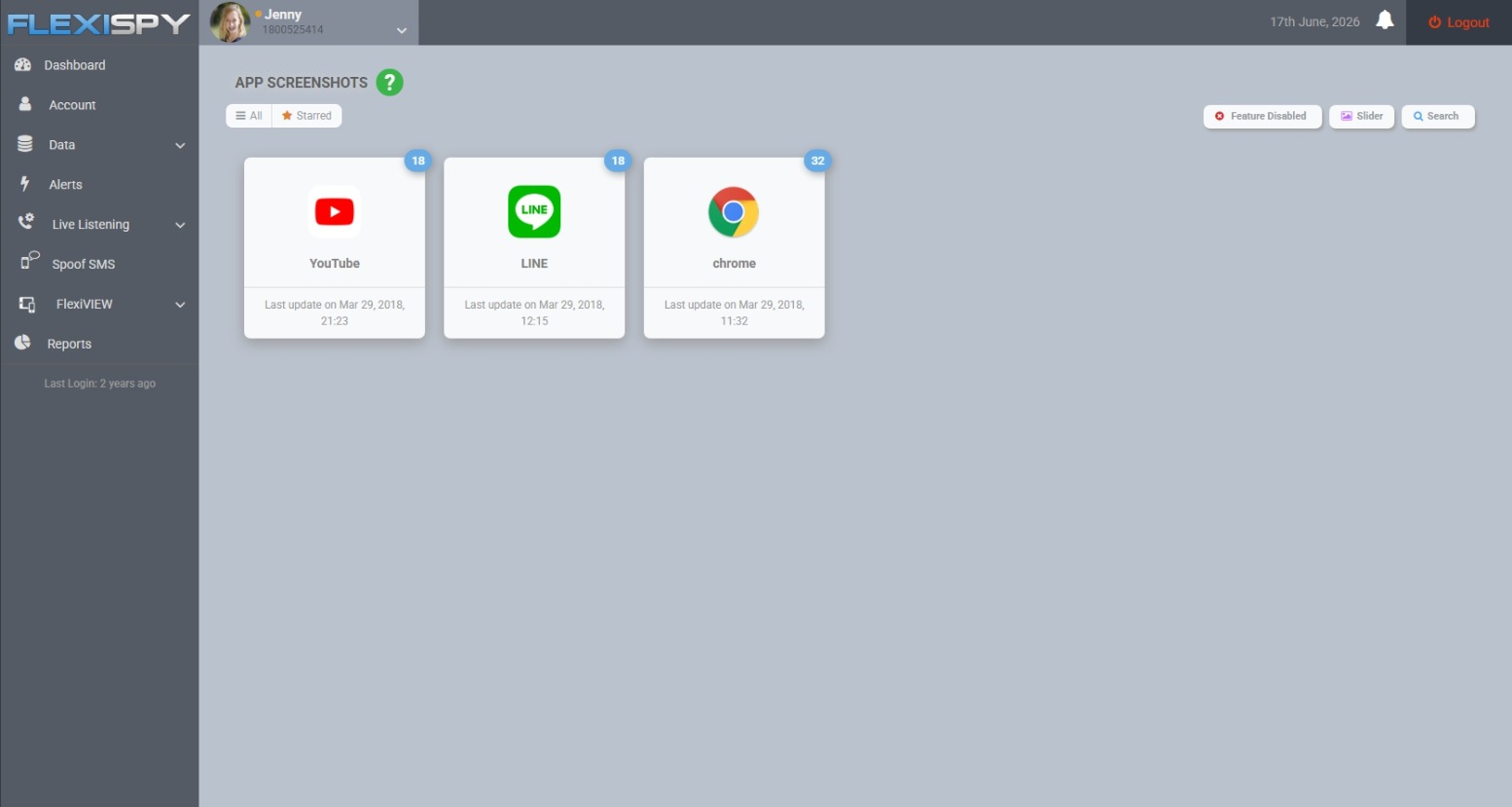
Its higher tiers capture app screenshots and instant messages across many popular apps, giving you an honest window into what a conversation actually looked like rather than a secondhand summary.
It’s fair to be direct about the limits here too.
FlexiSPY is Android and computer only — there’s no iPhone or iPad version, because current-generation iOS devices can’t be jailbroken.
It won’t tell you what your child is feeling, and it’s not a substitute for the conversation that has to happen first.
If any of the deeper features you’re considering involve capturing messages or app activity, it’s worth knowing that rules around recording and message interception vary by country and state — this isn’t legal advice, so it’s worth a quick check of your local law before you set anything up on a device your minor child uses.
The honest bottom line
AI companions aren’t going away, and pretending your teen definitely hasn’t touched one isn’t a strategy — the numbers say otherwise.
Most kids experimenting with these apps are fine.
A smaller number are quietly substituting a validating bot for the harder, more valuable work of real friendship, and that’s the pattern worth watching for.
Talk first, look at what’s actually on the phone second, and reach for a deeper tool only if you genuinely need the visibility a conversation isn’t giving you.