
Executive summary:
- In a European survey of 7,974 people ages 16–19, 11.8% reported using dark-web forums. The dark web consists of intentionally hidden sites that require specialized tools such as Tor.
- Tor can be used lawfully, but teens may encounter illegal markets, exploitation, malware, scams, or extreme material. This guide helps you judge what you found and respond at the right level.
- On your minor child’s Android phone or computer, FlexiSPY can show relevant context such as installed applications, application activity, browsing activity, and network connections.
What is the dark web, and how is it different from the deep web?
The surface web is the public internet that ordinary search engines can index. News sites, public profiles, and online stores generally sit here.
The deep web is simply content that search engines cannot access. Your email inbox, online banking, medical portal, school account, and subscription services are all familiar examples. Most deep-web activity is routine and harmless.
The dark web is a much smaller category of intentionally hidden services. These sites usually require specialized software or network configurations and often use addresses ending in .onion. They are designed to make the location of a service and the identity of its users harder to trace.
Tor is the tool parents are most likely to encounter. It is both an anonymity network and the name of a browser used to reach onion services. Installing or using Tor is generally not illegal by itself. Privacy-conscious users, journalists, researchers, and people living under censorship can have legitimate reasons to use it.
Buying controlled substances, committing fraud, threatening someone, accessing systems without authorization, or possessing illegal abuse material remains unlawful regardless of the browser involved.
A teen will not normally reach an onion service through an ordinary accidental search. Some deliberate setup or an onion link is usually involved. Once inside that ecosystem, however, exposure to disturbing or illegal content can be unintended.
Why would a teen use it?
Curiosity is a common starting point. A teen may have heard that the dark web is mysterious, private, forbidden, or technically challenging. Friends, online videos, gaming communities, and cybersecurity interests can all prompt experimentation.
Other motivations deserve closer attention: bypassing restrictions, looking for pornography, joining hacking forums, buying drugs or stolen accounts, hiding another problem, or following a link sent by someone online.
The available prevalence data should be kept in perspective. In the European survey cited above, 11.8% of respondents ages 16–19 reported using dark-web forums, 10.7% reported using darknet markets, and 9.1% reported using Tor. Fewer than 2% used forums or markets daily. This was a multi-country European sample collected in 2021, not an estimate for every teen or for American adolescents.

What can teens encounter there?
The risks include fraudulent stores, malware, stolen passwords and payment data, drug sellers, hacking communities, violent material, extreme sexual content, child sexual abuse material, and people attempting to manipulate or exploit younger users.
Researchers examining 176,683 onion domains collected between 2018 and 2023 found that approximately one-fifth shared child sexual abuse material. They also found that 21 of 26 widely used Tor search engines allowed access to such sites.
This describes the studied onion ecosystem, not what every Tor user sees, but it confirms that illegal material can be readily discoverable in relevant search environments.
In a separate self-selected survey of people searching for that material, 50.5% described their first exposure as accidental and 65.3% said they first saw it before age 18, according to the same Scientific Reports study.
Illegal purchasing also carries risks beyond getting caught. The DEA reported seizing more than 79 million counterfeit pills containing fentanyl in 2023, over 33% more than in 2022. That seizure total does not show the odds that any particular pill contains fentanyl, but it demonstrates why pills bought through anonymous markets, social-media sellers, or illegal online pharmacies cannot be assumed to contain what the seller claims. An unexplained drug delivery warrants immediate action, not a routine screen-time discussion. See the DEA’s counterfeit-pill warning.
The most serious pathway may begin outside the dark web
Do not focus so narrowly on Tor that you miss what is happening on ordinary platforms. Grooming, drug advertising, blackmail, and recruitment can begin in games, social media, or messaging apps before moving into encrypted or anonymous spaces.
NCMEC’s CyberTipline received 1.4 million online-enticement reports in 2025, including more than 80,000 reports concerning sextortion and more than 800 in which an offender reportedly traveled to meet a child. These are suspected-incident reports rather than a count of unique, confirmed cases, but they show why an unknown adult, threat, money demand, or planned meeting matters even if Tor is nowhere on the device. NCMEC explains the scope of these reports in its 2025 CyberTipline data.
What signs matter—and what do they actually prove?
A Tor browser, VPN, cryptocurrency wallet, private browser, or cleared history is a reason to ask for context. It is not proof of criminal activity. One technical signal may reflect curiosity, privacy concerns, schoolwork, or experimentation.
A cluster of behavioral and practical signs is more concerning:
- Unexplained packages, purchases, cryptocurrency transfers, or requests for money
- Sudden fear, panic, withdrawal, sleeplessness, or distress after receiving messages
- Threats, blackmail, sexual demands, or instructions not to tell a parent
- Contact with unknown adults or plans to meet someone in person
- Rapid deletion of messages combined with secret accounts or unfamiliar encrypted tools
- Evidence of drugs, weapons, stolen credentials, illegal files, or fraud
- Repeated account-security alerts, unexpected software, or signs of malware
Some of these behaviors overlap with cyberbullying warning signs parents should not ignore, so ask about ordinary social and messaging platforms as well as Tor.
A package alone may have an ordinary explanation, just as a VPN may be used for privacy. A package combined with cryptocurrency transfers, deleted conversations, and unusual physical symptoms is a different situation.
How Urgent Is It? A Four-Level Response Guide for Parents
Level 1: Curiosity or privacy tools only
What you found: Tor, a VPN, cryptocurrency information, private browsing, or technical research, with no threats, purchases, illegal content, or distress.
What to do: Ask what the tool is being used for, where your teen learned about it, and which sites or communities they intended to visit. Set a clear boundary against illegal markets and downloading unknown files. Review account security and device rules.
Level 2: Disturbing content, a scam, or malware
What you found: Exposure to violent or sexual material, suspicious downloads, stolen account warnings, a scam purchase, or unwanted contact without an immediate threat.
What to do: Stop further access, disconnect the affected device from sensitive accounts if compromise is suspected, change important passwords from a clean device, and check financial accounts. Ask whether anyone requested images, money, secrecy, or a move to another platform. Disturbing exposure may require emotional support even when it was accidental.
Level 3: Illegal purchasing, sexual coercion, or threatening contact
What you found: A suspected drug order, sexual-image demand, blackmail, adult contact, payment request, illegal transaction, or threat.
What to do: Treat the matter as a safety incident. Do not pay an extortionist or negotiate alone. Preserve usernames, URLs, threats, payment details, transaction records, and package information. Do not download, duplicate, or forward sexual or illegal files. Contact law enforcement, the FBI, or NCMEC’s CyberTipline as appropriate, and assess whether your teen may harm themselves.
Level 4: Immediate physical danger
What you found: A planned meeting, active overdose symptoms, a weapon, a credible threat against another person, imminent self-harm, or an offender who knows your location and is approaching.
What to do: Call local emergency services now. Keep your teen with you, prevent the meeting or further substance use where you can do so safely, and follow emergency instructions. Evidence collection comes after immediate safety.
If you have just found something serious, protect the evidence
A frightened parent may delete an account, erase the browser, confront the sender, or forward a sexual image to another adult for advice. Those actions can destroy useful evidence, escalate threats, or create another copy of illegal material.
- Confirm whether your teen is physically safe and ask directly about self-harm, drugs, weapons, threats, and planned meetings.
- Tell them they are not in trouble for being threatened or exploited. Deal with any earlier rule-breaking separately.
- Do not pay, bargain with, or threaten an extortionist.
- Do not forward, download, or duplicate sexual images of a minor.
- Preserve surrounding evidence such as usernames, profile links, onion addresses, dates, written threats, payment handles, transaction records, and package labels.
- Avoid deleting accounts or conversations before receiving reporting guidance.
- Use local emergency services for immediate danger. Report suspected child sexual exploitation through NCMEC’s CyberTipline and report relevant cybercrime or exploitation to the FBI. Take It Down may help when sexual images taken before age 18 could be circulating online.
How to ask your teen what happened
Start with the specific thing you found rather than a broad accusation. Neutral questions make it easier to separate experimentation from danger:
- “I saw Tor installed. What were you trying to access?”
- “Did someone send you the link, or did you look for it yourself?”
- “Has anyone asked you for money, pictures, personal information, or secrecy?”
- “Did you download anything or place an order?”
- “Does anyone online know your real name, school, address, or location?”
- “Are you worried someone will expose, hurt, or punish you?”
If exploitation is involved, say clearly that threats and coercion are the offender’s responsibility. Fear of losing a phone or being punished can keep a teen silent while the danger grows.
Can monitoring help you understand the situation?
Age-appropriate supervision can provide context when you have a concrete concern about your minor child’s Android phone or computer. FlexiSPY records installed applications, application activity, browsing activity, and network connections on both supported product categories. Its Computer product also includes search-engine history and application screenshots.
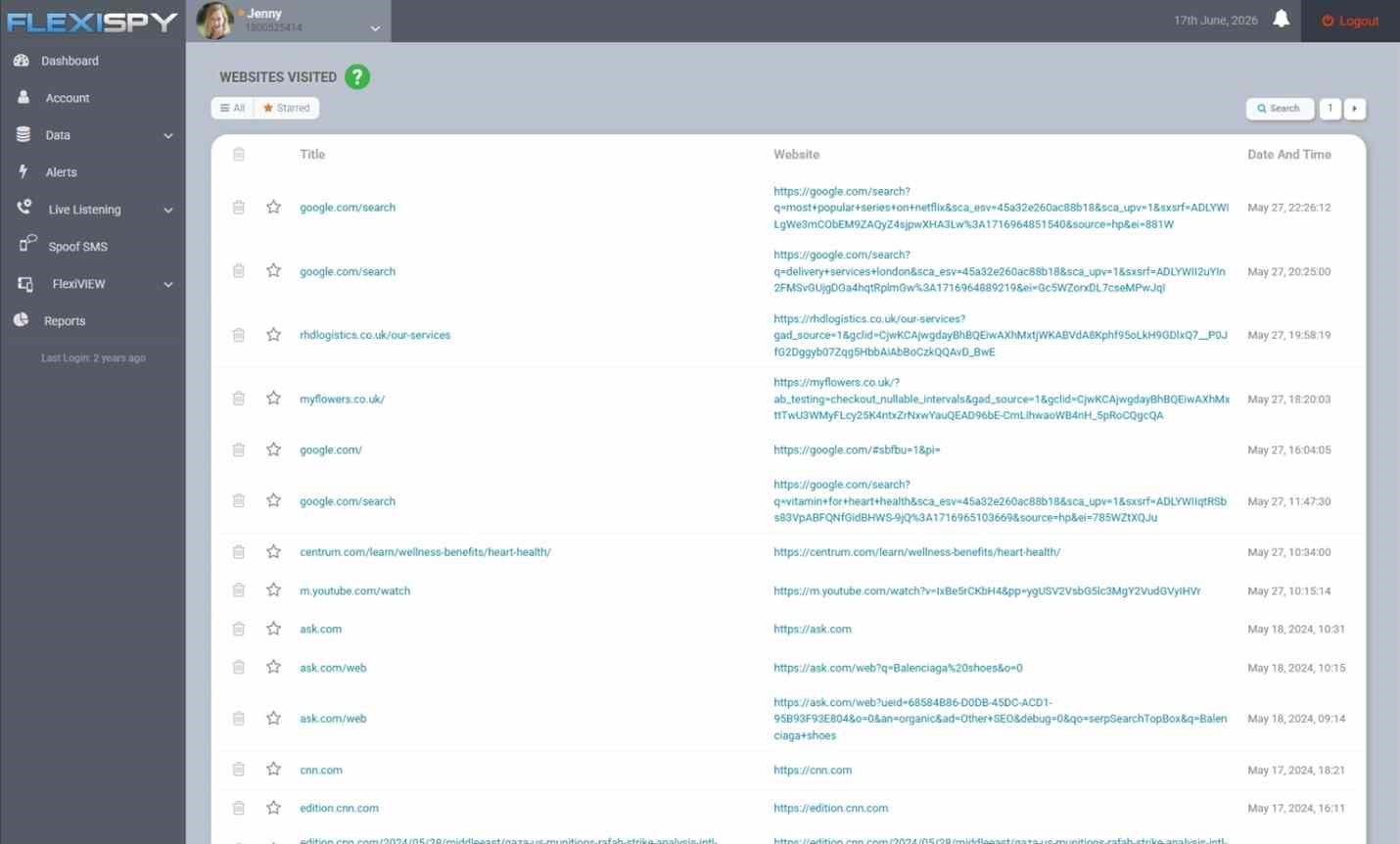
These records can help you establish whether unfamiliar software was installed or whether other changes occurred around the same time. They should not be treated as proof that a privacy tool was used for illegal activity. Tor, encrypted services, cryptocurrency, and deleted history each require context, while serious exploitation may happen without any of them.
Monitoring also cannot replace emergency help, medical care, account-security work, or a report to the appropriate authorities. Use it to clarify patterns and enforce household device boundaries—not to delay action when there is a threat, drug delivery, planned meeting, or self-harm risk.
What parents should remember
The dark web is neither a harmless technical playground nor automatic proof of crime. The right response depends on what sits around the technical signal.
Tor by itself calls for questions. Tor combined with threats, illegal purchases, sexual coercion, rapid deletion, unexplained money, or plans to meet someone calls for intervention. If there is immediate physical danger, skip the device investigation and contact emergency services.
Most importantly, look beyond the dark web. The person exploiting a teen may first appear in a familiar game, social network, or messaging app. What matters is not only which browser your child used, but who is contacting them, what they are being asked to do, and whether they feel frightened or trapped.