
Executive summary:
- Online contact is normal—but still needs boundaries: 97% of U.S. teens use the internet daily, according to Pew Research Center. An online stranger is simply someone your child does not know offline, from a gaming teammate to an unsolicited sender.
- Behavior matters more than the label: Look for secrecy, pressure, sexual requests, money, threats, personal-information sharing, or plans to meet—not merely an unfamiliar username. This guide gives you a calm order for checking the contact and responding.
- How FlexiSPY can help: If an open conversation and device review leave important gaps, FlexiSPY can help parents review relevant activity on their minor child’s Android phone or computer.
What does “talking to strangers online” actually mean?
An online stranger is anyone your child communicates with but does not know in person. That category can include a friend-of-a-friend, a regular gaming teammate, someone from a large group chat, an online-only friend, or a person who appeared unexpectedly in direct messages.
“Stranger” does not automatically mean “online predator.” An online predator is someone attempting to manipulate or exploit a child, often by building trust, creating secrecy, introducing sexual content, demanding images or money, or seeking physical access. You cannot reliably identify that intent from a profile picture, claimed age, or one isolated message.
Your child may encounter unfamiliar people through multiplayer games, comments, livestreams, group chats, social media, messaging apps, voice channels, or a mutual online friend. The key distinction is therefore not known versus unknown. It is ordinary social contact versus conduct that is unverified, manipulative, threatening, or exploitative.
The 15-Minute Context-First Conversation Check
This checklist is designed for the stressful period immediately after you discover stranger chats. It puts the steps in a safer order so you do not accidentally erase evidence, overlook an imminent meeting, or frighten your child into withholding context.
- Check for immediate physical danger.
- Tell your child they are not in trouble for explaining.
- Map the relationship from the beginning.
- Read the beginning and the recent messages.
- Look for patterns, not just “bad words.”
- Work out what your child has shared.
- Classify the contact before you act.
- Preserve first; block and report second.
1. Check for immediate physical danger
Before debating whether the relationship is appropriate, ask whether the person knows your child’s current location or has arranged contact today. Look specifically for:
- A planned meeting, ride, trip, delivery, or place to wait
- Live-location sharing or recent disclosure of a home address
- Tickets, reservations, transportation instructions, or money for travel
- Threats against your child, your family, another student, or the sender
- Pressure to leave home or go somewhere without telling you
If a meeting is imminent, the child has left to meet the person, or there is a credible immediate threat, contact local emergency services now. Do not spend another hour investigating the account first.
2. Tell your child they are not in trouble for explaining
Lead with reassurance rather than an accusation. A useful opening is: “You are not in trouble for telling me. I need to understand who this person is, what they know about you, and whether they have asked you to do anything private or meet them.”
Avoid immediately threatening to remove every device. If disclosure guarantees punishment, your child may minimize what happened or hesitate to ask for help later.
3. Map the relationship from the beginning
Ask your child to explain the relationship in their own words, then establish five basic facts:
- Where did they first encounter each other?
- Who initiated the first direct contact?
- How long have they been communicating?
- What name, age, school, location, and identity does the person claim?
- Has the conversation moved to another username, account, phone number, or app?
Do not begin with “Who is this?” and stop when you hear a first name. Online identities are easy to change, and a person may appear under several usernames.
4. Read the beginning and the recent messages
One alarming line can look different when it is part of a joke, quotation, argument, or group-chat exchange. Conversely, an ordinary recent exchange can hide weeks of trust-building and pressure. Use the stages of online grooming as a recognition framework when attention, secrecy, sexual pressure, or control appears to be escalating.
When possible, review the first contact, the point where the conversation became private, and the most recent messages. Note whether the claimed age or personal story changed. Ask your child what unfamiliar slang, deleted references, or shared jokes mean instead of guessing.
5. Look for patterns, not just “bad words”
Concerning behavior may be subtle and nonsexual at first. Check for:
- Requests to keep the relationship secret, delete messages, or hide an app
- Statements that parents “would never understand” or attempts to isolate the child
- Rapid declarations of love, intense compliments, dependency, guilt, or jealousy
- Repeated pressure after your child says no or appears uncomfortable
- Questions about whether the child is alone, where they sleep, or when adults are away
- Sexual conversation, exposure to explicit material, or requests for photos or video
- Offers of gifts, game currency, money, work, modeling, or favors
- Blackmail, threats, harassment, impersonation, or demands for payment
In a nationally representative survey commissioned by Thorn, 40% of minors said they believed someone had tried to befriend and manipulate them online. That reflects the young people’s perception rather than a confirmed grooming rate, but it shows why patterns of pressure deserve attention. See Thorn’s online grooming findings.
6. Work out what your child has shared
Ask directly, without shaming, whether the contact received any of the following:
- Full name, age, phone number, school, team, or workplace
- Home address, regular route, schedule, or live location
- Photos showing a school badge, street sign, house number, or uniform
- Passwords, verification codes, recovery information, or account access
- Private, intimate, or sexual images
- Family details, financial information, money, or gift cards
The answer determines your next move. Exposed credentials call for account security changes. A known location may require immediate safety planning. Sexual-image demands, extortion, or threats require preservation and formal reporting—not a private negotiation with the sender.
7. Classify the contact before you act
| Classification | What you may see | Proportionate response |
|---|---|---|
| Unknown but currently low concern | A shared-interest conversation that remains age-appropriate, with no secrecy, pressure, private information, money, or meeting plans. | Discuss boundaries, verify what you reasonably can, tighten contact settings, and schedule a follow-up check. |
| Unverified and concerning | Identity inconsistencies, rapid intimacy, persistent private contact, gifts, isolation, disappearing messages, or pressure to move platforms. | Pause contact, preserve relevant details, review connected accounts, report suspicious conduct through the platform, and increase temporary supervision. |
| Unsafe or urgent | Sexual requests, image demands, blackmail, threats, known location, travel arrangements, or an imminent meeting. | Protect the child immediately, preserve evidence, use formal reporting channels, and contact emergency services when there is immediate danger. |
Moving to another app does not prove abuse. It does mean you should follow the conversation. Thorn found that 65% of surveyed minors had been invited by an online-only contact to move from a public chat to a private conversation on another platform.

8. Preserve first; block and report second
Unless someone is in immediate physical danger, record what may be needed before deleting the chat or account. Save usernames, profile links, dates, relevant messages, threats, payment requests, meeting details, and the names of every platform involved. Avoid repeatedly downloading or forwarding sexual images of a minor; preserve the surrounding information and seek guidance through an appropriate reporting channel.
After preserving what matters, block the account and report it through the platform. If credentials or recovery details were exposed, change passwords from a trusted device, review signed-in sessions, update recovery information, and enable stronger account security.
Check beyond the one visible conversation
A stranger relationship may begin in a public game and continue through private messages, text, voice chat, or a secondary social account. Review categories rather than relying on platform-specific buttons, which frequently change.
- Contacts and followers: Look for unfamiliar names, duplicate identities, recent additions, and the same profile photo under different names.
- Message locations: Check direct messages, message requests, archives, group chats, disappearing-message settings, and recently deleted areas where available.
- Apps and accounts: Identify installed gaming, messaging, social, and video apps, including secondary profiles.
- Calls: Check whether messaging progressed to voice or video calls and whether the same number appears repeatedly.
- Files and transactions: Look for links, downloaded files, gifts, payment requests, game currency, delivery notices, or login alerts.
- Privacy settings: Review who can send direct messages, issue friend requests, discover the account, view location, or access contact syncing.
Do not assume the stranger must be an adult. Peer harassment can also cause serious harm, including impersonation, threats, exclusion, or pressure to share images. Focus on what the person is doing and how the contact is affecting your child.
When should you escalate?
Handle with boundaries and follow-up
Ordinary, age-appropriate conversation without pressure or private disclosures may need clearer rules rather than a crisis response. Agree on what information stays private, when a parent must be told, and whether online friends can move to private channels. Set a date to revisit the contact.
Involve the platform, school, or a counselor
Use platform blocking and reporting for persistent unwanted contact, fake accounts, harassment, or boundary violations. If classmates or school life are involved, preserve the messages and contact the school through its established safeguarding or bullying process. A counselor may help when loneliness, social difficulty, coercion, or fear makes it hard for your child to disengage.
Use child-exploitation or law-enforcement reporting channels
If images or blackmail are involved, review these sextortion warning signs and response steps.
Sexual image requests, sextortion, credible threats, planned travel, or an adult seeking physical access require more than an account block. NCMEC received 1.4 million reports concerning online enticement in 2025, including reports involving sextortion and offenders traveling to meet children. That is a volume of reports, not a count of unique children or a population prevalence estimate. Read NCMEC’s explanation of its 2025 data.
In the United States, suspected online child sexual exploitation can be reported to the NCMEC CyberTipline. Contact local emergency services when a meeting or threat is imminent, your child is missing, or someone knows and is acting on the child’s current location.
How to preserve trust after the immediate problem
Once the urgent review is over, tell your child what you checked, what you found, and what happens next. Separate temporary safety measures from permanent rules. A 10-year-old using open game chat may need direct supervision; a 16-year-old with a meaningful online friendship may need a more collaborative verification and boundary conversation.
Useful language includes:
- “I am concerned about the secrecy and pressure, not angry that you met someone online.”
- “You can tell me about a mistake without automatically losing every way you talk to your friends.”
- “I’m going to check these accounts for the next week because this person knows personal information. Then we will review the rule together.”
- “What did this friendship give you that felt important?”
That last question matters. Shared interests, loneliness, identity exploration, or trouble connecting offline may explain why the relationship became important. Addressing that need makes a repeat situation less likely than simply removing one account.
When a monitoring tool may help—and when it may be too much
If your child can show you the full conversation and the issue is limited to one account, a conversation, privacy-setting review, and follow-up may be enough. Do not use a powerful tool merely because an unfamiliar username exists.
For a minor child’s Android phone, FlexiSPY’s Lite tier includes SMS and MMS messages, address-book information, call logs, application activity, installed applications, browsing activity, and dashboard alerts. Premium adds supported messaging and social services, including Instagram Direct Messages, WhatsApp, Telegram, TikTok, Discord, Facebook Messenger, Snapchat Messages, and others listed for that tier.
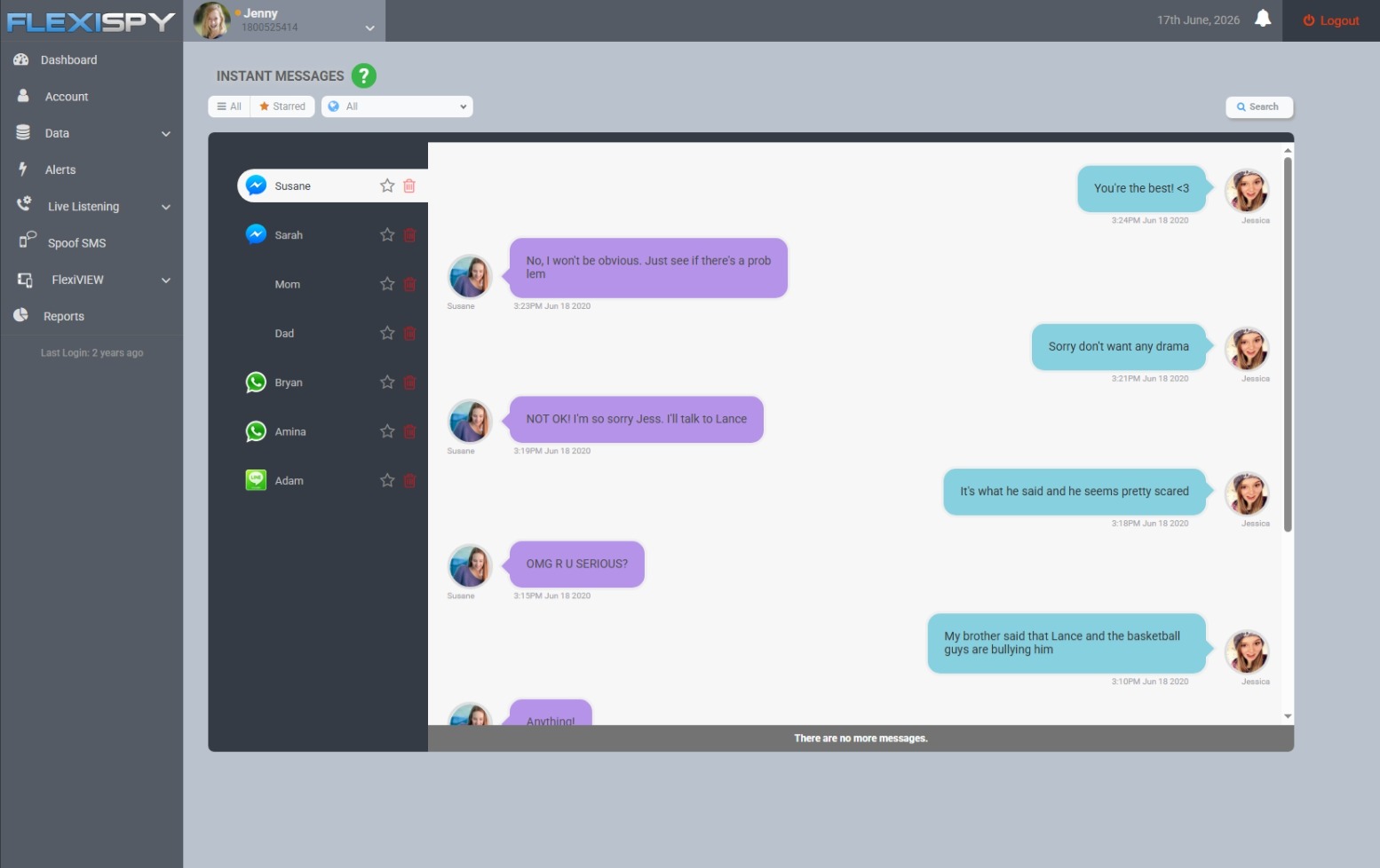
The FlexiSPY computer product includes webmail, application screenshots, application activity, installed applications, browsing activity, and supported services such as Facebook Messenger, Telegram, WhatsApp, LINE, Viber, and WeChat. These records can help map communication across channels, but no tool replaces asking your child what the relationship means or responding properly to an urgent threat.
Use monitoring only on your own minor child’s device or a device you otherwise have legal authority to monitor. Explain the safety reason and boundaries in an age-appropriate way whenever circumstances allow. Laws governing message capture, call recording, and related monitoring vary by country and state; check local requirements before enabling such features. This is not legal advice.
The most important question is what the stranger is asking for
An unknown contact is a reason to look closer, not proof that your child is in danger. Start with physical safety, hear your child’s explanation, reconstruct the relationship, trace it across platforms, and judge the behavior rather than the profile.
Secrecy, coercion, sexual requests, money, threats, and physical-access plans move the situation into a different category. Respond firmly when those signs appear—but make sure your child leaves the conversation knowing that asking you for help was the right thing to do.